A piece by Doug Va Nort, commissioned for the Fieldwork land art site, on display May-November 2017 and June-November 2018.
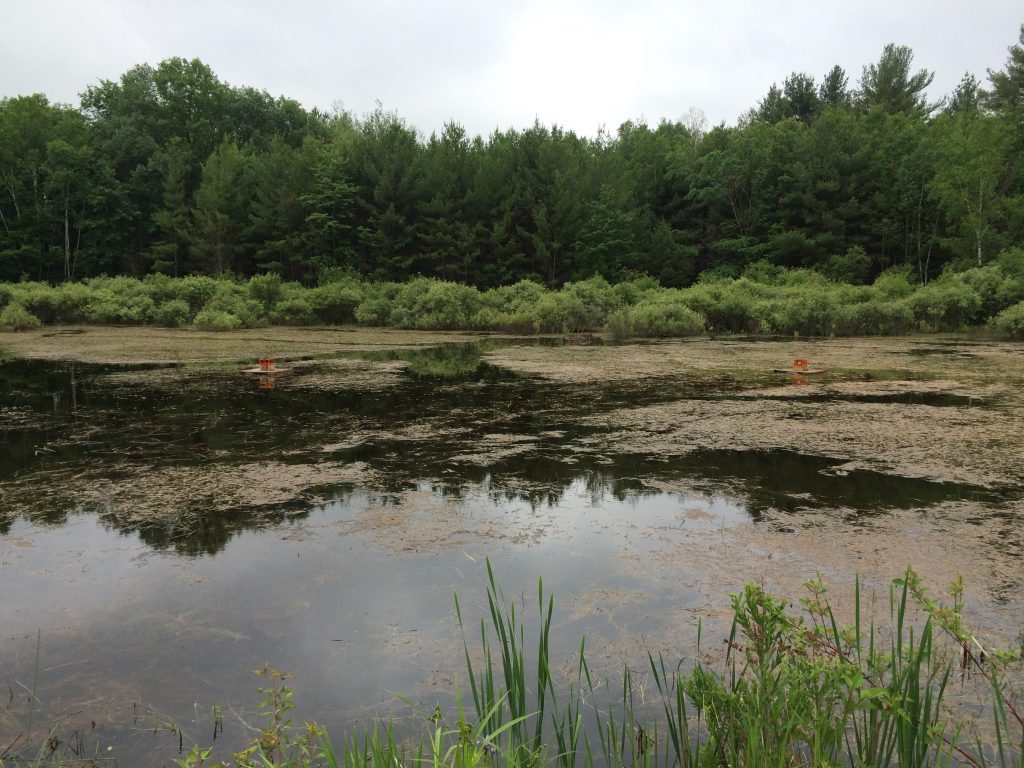
This piece creates an evolving interplay, in sound, between various agents that include humans and non-humans, both computational and biological. The physical GSO artifacts are a set of solar-powered ‘creatures’, designed to interact with one another and the larger sonic field in which they are immersed. The means of communication begins as a call/response from a set of simple tones/noises that introduce this new species into the sonic environment. Each creature responds to sounds that are similar to their known vocabulary, evolving their call over the course of months based on the difference found between their own lexicon of calls and those that they hear around them. These artifacts, though, are merely vessels: rather than meditating on the technological objects themselves, though this piece I invite you to listen to this new sonic presence as it is woven into the fabric of an existing, dynamic and diverse acoustic ecology.




Credits:
Special thanks to Kieran Maraj of the DisPerSion Lab for his excellent work on the circuitry and enclosures.
Additional Reference:
Van Nort, D. Genetically Sonified Organisms: Environmental Listening/Sounding Agents, in Proc. Of the International Workshop on Musical Metacreation (MuMe), 2018.
Origin8 was an interactive dance/media piece which utilized MYO sensing technology. This was a collaboration with Van Nort (music), Sinclair (visuals) and the National Ballet School of Canada (Shaun Amyot, choreographer). My work as composer centred around creating interactive music composition that was driven by the electrical muscle (myogram) and movement activity 21 dancers (hailing from 21 different countries) in collaboration with machine learning – a kind of biosensing and machine co-creation. The piece was created for the quadrennial Assembleé Internationale festival which brings together top Ballet schools and their select students internationally. In this work, the interactive music applied machine learning to the task of learning mappings between MYO sensing and sonic output. As part of the interactive musical composition, the overall musical structure emerged from the actions and movements of the dancers, so that each of the performances had an overarching form but differed in their details. There are four sections, and the (choreographic and musical) content from sections 1-3 are combined and layered in section 4. Below is a video taken during the dress rehearsal, just prior to the opening.


Credits:
Shaun Amyot (choreography)
Don Sinclair (interactive visuals)
Doug Van Nort (interactive music composition)
Additional Reference:
Doug Van Nort, “Gestural Metaphor and Emergent Human/Machine Agency in Two Contrasting Interactive Dance/Music Pieces”. Proceedings of the International Symposium of Electronic Arts (ISEA), 2020.
This project integrates two MYO muscle-sensing armbands, shared-signal sound processing of an electro-acoustic ensemble and gestural recognition of Soundpainting-style conducting. In the project, the Soundpainter shifts modes between guiding performers, collaborating through movement/sound improvisation, and explicitly processing the sonic output of performers through their movements. These shifting modes of interaction require all performers to become attentive to the tensions between acoustic and electronic sources, between their origination point (instrumentalist vs. Soundpainter) and between bottom-up structured improvisation and top-down guiding via conducting. These continuums are amplified and explored through another layer of shared articulation, as machine learning is applied to recognition of the composer/conductors gestures, with symbolic recognition opening up channels of electronic processing and discrete states of potential sound transformation, . The underlying machine learning system is also trained on continuous mappings between conducted motion and sonic transformations, allowing the Soundpainter to perform these transformations through their (now free and unconstrained) movements, continuously co-shaping the output with a given performer. The presence of these two distinct modes of machine-mediation create a tension between the symbology of conducted instruction and that of continuously co-constructed sound, with the Soundpainter and performer sharing signals and intentional resonance in performance. I diagrammed and mapped out this larger human/machine system of listening and co-creation, as can be seen in the below image gallery.
Intersubjective Soundings narrows in on this collective experience as a compositional parameter, allowing for moments of getting “lost” in one another’s sound world and gestural intentions, while needing to pull back to the symbology of soundpainting-based conducting. The work therefore traverses the spectrum of embodied listening-in-the-moment at one extreme, and a reflexive consideration of musical meaning at the other, with both of these modes being mirrored in the movement of the conducting language. This project has been developed in the context of the Electro-Acoustic Orchestra and was premiered at the 2017 International Conference on Movement and Computing (MOCO), with myself at Deptford Town Hall at Goldsmiths University in London, and the EAO at the DisPerSion Lab in Toronto. In this piece, the sense of “listening across” that occurs between instrumental performer and conductor/performer was further heightened through the introduction of a telematic connection between sites.
In 2019 I was invited to present work for a CBC sponsored festival called CRAM. In this context I applied this project to a new piece with another instantiation of EAO, in this case co-located in an acoustically-interesting silo space on York University’s campus known as Vari Hall. We played it twice that evening, and someone was kind enough to post a phone-recorded video of one of the sets.


Credits
Piece Creation/Direction: Doug Van Nort
EAO for the London performance was:
London: Doug Van Nort (composing/conducting, MYO-based transformations)
DisPerSion Lab: Dave Bandi (guitar), Chris Cerpnjak (cymbals, glockenspiel) , Glen Hall (saxophone), Ian Jarvis (catRT+supercollider) , Ian Macchiusi (Moog mother), Mackenzie Perrault (guitar), Danny Sheahan (keys, samples), Fae Sirois (violin), Lauren Wilson (flute)
EAO for the CRAM performance was:
Doug Van Nort (composing/conducting, MYO-based transformations)
Chris Anderson-Lundy (saxophone), Dave Bandi (guitar), Chris Cerpnjak (cymbals, glockenspiel) , Erin Corbett (analog synth), Glen Hall (saxophone), Rory Hoy (bass), Ian Jarvis (catRT+supercollider) , Kieran Maraj (electronics), Ian Macchiusi (Moog mother), Mackenzie Perrault (guitar), Danny Sheahan (violin+electronics), Fae Sirois (violin), Lauren Wilson (flute)
Additional Reference:
Doug Van Nort, Conducting the In-Between: Improvisation and Intersubjective Engagement in Soundpainted Electro/Acoustic Ensemble Performance, Digital Creativity, 29(1), 68-81, 2018.
GNSS1 (2015)
A generative standalone code-based sonic composition
A purposefully obstinate software that, upon being clicked, transforms the listener’s screen into total blackness,
thereby enforcing a movement away from distracted multi-tasking and the common experience of post-itunes background listening.
Regarding the process/materials:
This piece applies a genetic algorithm in order to evolve a sonic composition using simple FM synthesis.
All sound is generated using 12 sine waves, 6 click generators and two reverb units.The first 100 seconds will always consist of a linear rhythmic build-up, and the piece will always last around 410 seconds. Beyond this, the result is determined by the evolutionary process, with the population of possible outcomes consisting of sonic parameters for the synthesis as well as rhythmic patterns.The system is injected with “fit” solutions in order to move it towards a preferred outcome, which biases it towards an overall form. When the application is first opened, the population is randomized. After each successive playing, the population maintains the members from the previous process. Each time the piece begins, sound material for the first 100 seconds is drawn from a small set of “fit” solutions, which seeds the initial evolution of the piece.
Examples:
single run, take 1
single run, take 2 (final 5.5 minutes)
single run, take 3 (final 4.5 minutes)
The Piece:
USB Slim Card Available for Purchase

Credits:
Created for the first issue of Super-Sensor (released in 2017)
Published by SONM – Sound Archive of Experimental Music and Sound Art, Puertas de Castilla Center (Murcia, Spain)
Curated by Francisco López
in collaboration with Heidi Boisvert and an international team of artists, [radical] Signs of Life is a large-scale biophysical dance show.
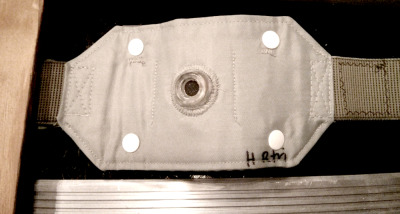
Through responsive dance, the piece externalizes the mind’s non-hierarchical distribution of thought. Media is generated from dancers’ muscles & blood flow via biophysical sensors that capture soundwaves from the performers’ muscular tissue. The choreography for the hour-long performance is composed in real-time by five dancers from a shared movement database in accordance with pre-determined rules based on principles of self-organizing systems. Outfitted with two wireless sensors each, the dancers–Jennifer Mellor, Ellen Smith Ahern, Hanna Satterlee, Avi Waring and Willow Wonder–create patterns that dissolve from autonomous polyrhythms to intersecting lines as they slip through generative video and light. Van Nort improvises original multi-channel electroacoustic music live in collaboration with new interactive dancer/sound instruments that he has created (using Xth sense technology), to sculpt a dense web of complex texture and emotion around the audience.
Regarding my interactive composition for this project:
All sound is generated from the dancers’ muscles. During performance, the qualities and patterns of the sonic gestural output from each dancer are learned/remembered by an interactive system. Near the conclusion, the stage lighting goes down and I improvise with this material towards an ending to the hour-long piece.
[radical] premiered at EMPAC (NY), the Experimental Media and Performing Arts Center in May 2013 through generous support from the Arts Department at Renssalaer Polytechnic Institute along with iEAR Studios. Rehearsal space has been granted through an Artist Residency at the Contemporary Dance & Fitness Center in Montpelier, VT. The project was realised thanks to the Creativity + Technology = Enterprise grant, awarded by Harvestworks through funds from the Rockerfeller Foundation’s New York City Cultural Innovation Fund and the National Endowment for the Arts.



Credits:
Director & Producer // Heidi Boisvert
Choreographer // Pauline Jennings
Music/Sound Designer // Doug Van Nort
Visual Designer // Raven Kwok
Lighting & Set Designer // Allen Hahn
Costume Designer // Amy Nielson
Xth Sense Creator // Marco Donnarumma
Wireless Network Engineer // MJ Caselden
Industrial Designer // Krystal Persaud
Set Fabricator // John Umphlett
Dancers // Jennifer Mellor, Ellen Smith Ahern, Hanna Satterlee, Avi Waring & Willow Wonder
Additional Reference:
Van Nort, D. [radical] signals from life: from muscle sensing to embodied machine listening/learning within a large-scale performance piece, in Proceedings of the 2nd International Workshop on Movement and Computing (MOCO), ACM, 2015.
It is with great pleasure that I have curated Computer Music Journal’s 2014 Sound and Video Anthology. I decided upon a theme of distributed agency in digitally mediated performance. In particular, my interest here is to showcase a multiplicity of ways in which shared agency manifests between human performers, as well as between human and machine performers. The collection begins with “Part A: Distributed Composition”; this section presents audio/video documents that highlight five unique approaches to distributing and sharing expressive voices between composer- performers. In these works, the resulting compositional voice does not reside in one central location, but rather is a product of collective co-creation, at varying levels of spa- tial and temporal remove. This set includes a work by Chris Chafe and colleagues, wherein large-scale com- positional qualities are influenced by global sea levels as well as by a live audience, resulting in a piece that
is not only artful but consciousness- raising at the same time. In contrast to this “outsourcing” of the details of compositional form, the works by Pedro Rebelo and The Hub both present two very different takes on “net- work music”: Rebelo’s work defines a global feedback network whose sonic character and overall shape are the product of a large-scale interconnection of disparate acoustic spaces and performers, whereas The Hub— the fathers of “computer network music”—present us with a canonical example of their ever-groundbreaking approach to composing for shared, living network structures. The piece by CLOrk (the Concordia Laptop Orchestra) eschews the classically calculated and precise world of the laptop orchestra in favor of the messy and risky world of interdisciplinary improvisation. The result is a work whose shared agency is a product of listening for gestural engagement across forms (kinetic, sonic). Finally, Bill Hsu and Chris Burns present a piece that intersects this world of cross-media improvisation with shared control at the level of their interactive performance systems, resulting in a document that demon- strates the possible richness discov- ered when sharing gestures across media, between human performers, and with the system itself.
This sharing of system-level gestural and compositional forms is the focus of “Part B: Musical Metacre- ation.” This section highlights cutting-edge machine improvisation systems in performance with two top-level human improvisers: Paul Hession on drums and Finn Peters on flute and saxophone. Hearing these disparate systems at play with the same performer begins to hint at the stylistic differences of their composer-designers, as well as the virtuosic flexibility of the human players. In order to bring focus to- wards listening to these differences, I have decided that this section should be audio-only. Each of these excerpts comes from a single concert of the same name that took place at Cafe OTO in London in July 2014. The curation of this concert was the work of Ollie Bown, and so the excellent selection of the included systems is purely to his credit. Aside from being privileged to take part in the concert, from a curatorial point of view I sim- ply had the good sense to incorporate these works into the in-progress curation of this collection, both because they fit so nicely with my chosen theme and because I could feel the strong improvisational musicianship on the evening of performance. I will leave the description of each system and piece for the program notes; taken
as a whole, I feel that these works create an excellent counterpoint to Part A by virtue of their cohesion
as well as a concentrated focus on both stylistic engagement and sonic gestural forms (as compared with the expansive and organic crossing of media and expressive types found within the first set). As a collection, I hope that you will find the diver- sity and quality of these works as compelling as I have, and that they might provide for a moment to reflect on the creative insights that may be gained when one “loosens the reins” on one’s own artistic control, instead distributing it among a collective of listening and expressing performers, be they present or tele-present, musical beings or meta-musical machines. -Doug Van Nort
Tracklisting:
A1 Chris Chafe – Polartides
A2 Pedro Rebelo – Netrooms: The Long Feedback
A3 The Hub – Multiple Issues
A4 CLOrk – Dancing with Laptops
A5 Bill Hsu, Chris Burns – Xenoglossia/Leishmania
B1 Paul Hession, Isambard Khroustaliov – Anything In Any Order By Anything At Any Time For Any Reason
B2 Paul Hession, Arne Eigenfeldt – The Indifference Engine versus Paul Hession
B3 Paul Hession, Doug Van Nort – Hession (Percussion) / Van Nort (FILTER System)
B4 Finn Peters, Ollie Bown – Zamyatin (software by Oliver Brown) with Finn Peters (sax)
B5 Finn Peters, Nick Collins – Finn Peters—Sax, Nick Collins—FinnSystem
B6 Finn Peters, Shlomo Dubnov – Finn Peters—Sax, Shlomo Dubnov and Greg Surges—Software
B7 Michael Young – piano_prosthesis
B8 Finn Peters, Paul Hession, Matt Yee-King – Finn Peters/Paul Hession/the Matt Yee-King simulator
I wrote this piece for the Composers Inside Electronics (CIE), premiered at Roulette on October 2nd, 2012. The performers were John Driscoll, Tom Hamilton and Doug Van Nort. The piece is for an ensemble of laptops that control the evolution of a genetic algorithm, which in turn shapes many layers of sonic textures and gestures that fly about the room – and in this case across the venue’s eight-channel sound system. An additional player is a machine entity that remembers the sequence of sonic actions throughout the performance, recalling certain sections at particular moments of the piece and recombining this past sonic memory while spatializing this throughout the room. In this way the piece strikes a balance between the immediacy of the evolving group decisions and a larger structure for the piece.
As I often like to do, for On-to-genesis I composed both a software instrument and a score. The instrument contains the GA process, a series of granular synthesis sound modules and presets that constrain possible sound materials and saved sonic states. I like this approach as it allows me to provide compositional constraints (e.g. begin from preset X in section Y) yet maintains a focus on listening that turns a lot of improvisational control over to the performer. Part of the performer’s control is that they define what is the most “fit” state of the system, which biases the evolution of the algorithm and in turn the internal sonic structure that emerges from this. You might say that I provide a larger form and constraints on the process, and the internal structure emerges from within this. The following is a video that shows the instrument in action. If you would like to see a longer video that demonstrates how the patch/algorithm works it can be found here.
The result from the premiere was an immersive experience that sounded quite good in the hall. The following is a recording of the final 9 minutes of this 20 minute composition. You can hear some of the spatial motion; imagine yourself in a beautiful theatre surrounded by an 8.2 channel sound system.
The piece is scalable to more performers. As with most of my pieces created for laptop ensembles, while it is written for good listeners with sonic/musical sensitivity, it does not presuppose any musical training.
I call this project FILTER: Freely Improvising, Learning and Transforming Evolutionary Recombination system. It is both a design of an “intelligent” interactive machine performer and a generative composition – a system endowed with a universe of possible musical actions that fits with my own aesthetic and approach to electroacoustic improvisation. My interest was in creating a system that could listen to the textural and gestural qualities as well as the stylistic tendencies of a performer and to take musical actions, improvising as a partner with the player and using their own audio as source material. FILTER does this by recombining, transforming and re-presenting this material in a radically new form as a new musical offering, in dialogue with its human partner. In some sense, I consider this as a project that is a reflection and genetic re-creation of what I would do as an improvising “laptop musician” with my GREIS instrument — wherein I often capture sounds on the fly while transforming them.
Below is an excerpt of a performance sesions with FILTER and Sam Sowyrda (of Cloud Becomes your Hands and the Dan Deacon live band). I like this one because Sam uses a wide timbral variety of objects, and because he is a Deep Listener who respects the system as a fellow player. This is clear in that the dynamics are well matched; also I find the interplay quite nice wherein Sam sometimes takes the lead and FILTER created textural layers or loops, while other times it switches to more varied events and Sam creates his own rhythmic “loops” in support of this. Listen for the materials selected by the machine, and realize that there is no human hand in terms of decision making (content, dynamics, timing, etc.).
A second, more recent example is a set with percussionist Paul Hession at Cafe OTO in London, as part of the Musical MetaCreation event (“MUME @ NIME”), curated by Ollie Bown. In this excerpt, sometimes FILTER is very clearly doing machinic things (e.g. long drone, phase vocoder-sounds) and at other times it is creating new patterns from the sonic material Paul had played previously. It listens to what he is doing in the moment and plays with him. I like this section because they collectively modulate their intensity and density.
Finally, I approached the trio Triple Point as an important test bed for developing FILTER. Here are some tracks from our 3-CD set “phase/transitions” which feature the system as a fourth performer: